
A fizzy little time machine: the history of Kombucha
Kombucha is tea that wandered through history collecting myths like stickers on a suitcase.
Most historians trace its origins to northeast China around 2,000 years ago, during the Qin Dynasty. It was prized as a “Tea of Immortality,” which sounds dramatic until you realize humans have always looked at bubbling liquids and thought: this probably grants powers.
The drink spread along trade routes into Japan and Russia. One popular legend says a Korean doctor named Kombu brought the fermented tea to Japan to treat Emperor Ingyō in the 5th century. Historians debate the details, but the name “kombucha” likely stuck from stories orbiting that tale.
Eastern Europe and in Russia, kombucha became deeply rooted in home kitchens, often called it “tea kvass,” and giant jars of fermenting tea sat beside windows like peculiar jellyfish aquariums. By the late 19th and early 20th centuries, it had spread through parts of Germany, Poland, and the Balkans.

Today, Kombucha has become a global sparkling empire of tart tea fizz. Ancient Chinese brewers probably never imagined flavors like “HONEY CHAGA KOMBUCHA.”
Chaga contains:
- polyphenols
- melanin-rich compounds
- beta-glucans
Living in Åland and being surrounded by beautiful nature, Kombucha making seems to be the perfect fit. Offering to the locals and also tourists who recognize very much, what Kombucha is.
Probiotics
The fermentation creates living microorganisms that may support gut microbiome diversity.
Not every bottle contains large active probiotic populations, especially commercial pasteurized ones, but homemade kombucha often does.
Think of it as microbial jazz:
Tiny biochemical negotiations happening in the jar; yeasts, probiotics and acids.
Organic acids
Kombucha contains acids such as:
- acetic acid
- gluconic acid
- glucuronic acid
These can contribute to antimicrobial effects and digestion support
Antioxidants from tea
Since kombucha begins as tea, it carries tea polyphenols and antioxidants.
If you use:
chaga tea → mushroom-derived antioxidant compounds
black tea → richer tannins
green tea → catechins
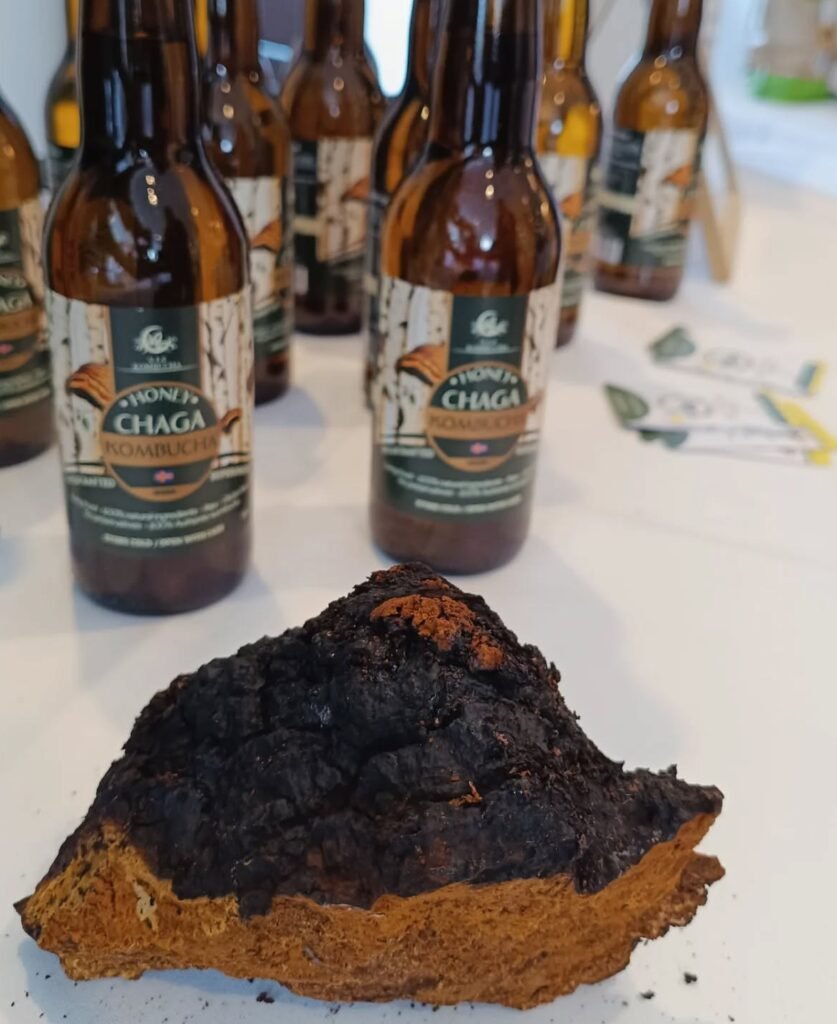
What Chaga may contribute
Chaga is traditionally used in parts of Russia, Finland, and northern Europe.
People use it for:
inflammation-related wellness traditions
immune support
antioxidant content
The science is promising but not definitive in humans yet. Most evidence is still preliminary or from lab studies.
Flavor-wise, Chaga has that earthy “campfire brewed in a birch forest during a thunderstorm” quality.
What happens in honey brewed Kombucha?
- the SCOBY adapts slowly
- fermentation becomes milder
- flavor becomes floral or wine-like
- microbial balance shifts
Possible combined effects of this brew:
- Probiotics from fermentation
- Tea antioxidants
- Chaga compounds
- Trace enzymes and acids from honey
Many people report:
- improved digestion
- steadier energy than coffee
- less sugar craving
- a mild “clear-headed” feeling